
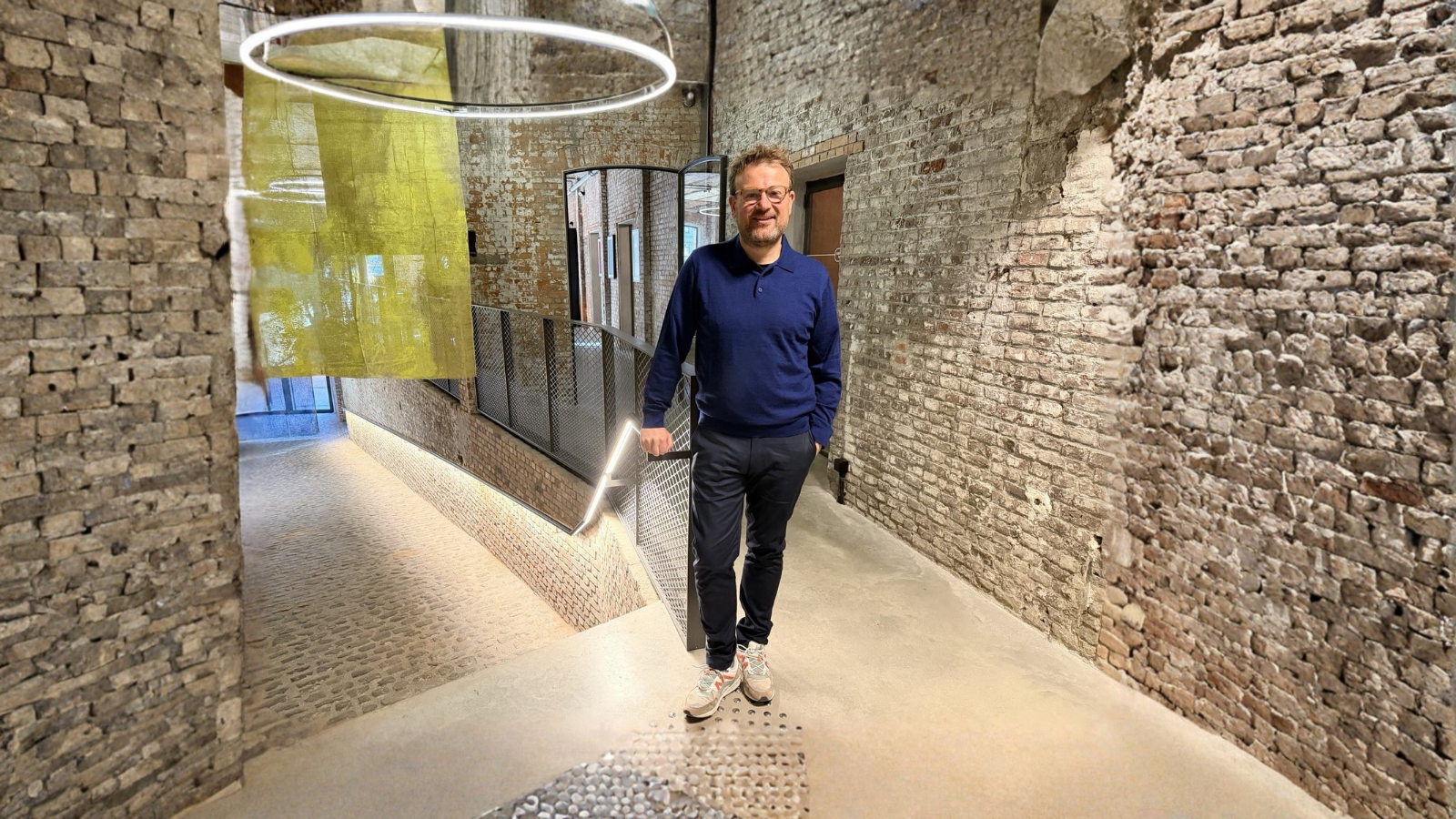
Twelve months ago, Stijn De Vleeschhouwer stepped into the role of Managing Director at SkeyDrone. In an industry evolving at unprecedented speed, his first year has been marked by strategic focus, sharper positioning, and ambitious plans for international growth.
We sat down with Stijn to reflect on the lessons learned, the milestones achieved, and his vision for the future of SkeyDrone.
Balancing Technology and Industry Reality
Looking back on his first year, what surprised Stijn most was not the pace of technological innovation, but the difference between what technology can enable and how quickly the industry can adapt.
“From a technology perspective, we can move fast,” he explains. “New detection capabilities, new features, and new insights can be developed rapidly. But the industry moves at a different pace. Regulations, approval processes, and governance structures inevitably slow things down. As Managing Director, you experience that tension every day: the gap between what is technically possible and what the sector can adopt.”
Despite these challenges, Stijn remains optimistic about the opportunities ahead.
“Belgium has an exceptional foundation to become a leader in this domain. We combine world-class aviation expertise with cutting-edge drone and airspace technologies, a strong regulatory framework and unique operational testing environments. The ecosystem is already there. What matters now is strengthening collaboration between government, regulators, critical infrastructure operators, industry partners and technology innovators. That’s how we can strengthen Belgium’s and Europe’s position in the future of airspace security.”
“But another challenge lies in education and adoption. The technology is available today, yet many organisations are still learning how to integrate drone security into their operations. There is often an assumption that once a system is installed, the problem is solved. In reality, there is a big difference between getting a system working and making it work in an operational environment. Effective drone risk management requires expertise, context and proportionate response. Supporting customers in that journey, from deployment to operational maturity, is just as important as the technology itself if we want to unlock the full potential of these capabilities.”
From Drone Detection to Drone Intelligence
One of the achievements Stijn is most proud of is the evolution of SkeyDrone’s market positioning. Over the past year, the company has sharpened its focus around DITTA™, the methodology that lies at the heart of its approach to drone threat management.
“DITTA™ clearly demonstrates why drone detection alone is not enough,” says Stijn. “Managing drone risks in safety-critical environments requires the complete chain: Detection, Identification, Tracking, Threat Assessment and Action. Only then can organizations make informed and proportionate decisions.”
“But technology alone is only part of the equation. While SkeyDrone’s core platform provides the intelligence layer needed to understand and assess drone activity, its value is amplified through integration with a broader operational ecosystem. This includes not only the technical integration of multiple sensors and systems, but also the integration of workflows, procedures and response actions. To achieve this, SkeyDrone works closely with a network of trusted partners, helping customers turn situational awareness into coordinated operational decision-making.”
The clarity of this message has resonated strongly with both customers and investors. “It’s rewarding to see the market recognize the value of moving beyond detection towards actionable intelligence.”
Helping Customers Understand What They See
A year ago, many conversations around drone security focused primarily on identifying objects in the air. Today, SkeyDrone’s role has expanded significantly.
“We’ve evolved from pure detection to interpretation and proportional decision-making,” explains Stijn. “The question is no longer just ‘What is flying?’ but also ‘Is it authorised?’, ‘Does it pose a risk?’ and ‘What is the appropriate response?’”
This evolution has also brought a stronger customer-centric focus to the company’s operations. “Every customer operates in a different environment, under different regulations and with a different perception of risk. That’s why effective drone security cannot be imposed from a technology provider’s office. It has to be built together with the customer. Over the past year, we’ve launched many initiatives aimed at supporting customers operationally, not just technologically.”
What Makes SkeyDrone Different?
According to Stijn, several factors distinguish SkeyDrone in an increasingly competitive market.
The first is hardware independence. “Our platform is modular and sensor-agnostic. Customers are not locked into a single hardware provider, which gives them flexibility and future-proofing as detection technologies continue to evolve.”
The second is deep expertise in lower airspace management. “We are not simply rooted in aviation. We specialize in understanding and managing the complex layer of airspace where drones operate. That expertise is increasingly valuable as drone activity continues to grow.”
Most importantly, however, is SkeyDrone’s threat assessment capability. “Threat assessment is where we make the biggest difference. Many solutions can detect a drone. The real challenge is consolidating data from multiple sources and turning it into a credible risk assessment that allows operators to take proportionate action. That’s where we believe we are ahead of the market today.”
“Looking ahead, we see similar challenges emerging beyond traditional drones. As autonomous systems expand across air, land and sea, the need for effective threat assessment and proportionate decision-making will only grow. We believe the principles that underpin our approach today will remain highly relevant in this evolving landscape.”
”Another important asset is the data we’ve accumulated over the years. Today, we have visibility into more than 100,000 drone flights, and that number continues to grow rapidly. That gives us a unique understanding of how drones actually behave in operational environments. The larger that dataset becomes, the stronger the foundation for accurate threat assessment and proportionate decision-making.”
“And of course, our team. We have assembled a unique combination of expertise in aviation, software and telco. Beyond the knowledge and experience, what stands out most is the agility of the team. We move quickly, collaborate closely and are constantly looking for better ways to solve our customers’ challenges. It’s a great team to work with and one of the company’s greatest strengths.”
Strategic Focus for Growth
Reflecting on the past year, Stijn identifies three initiatives that have had the greatest impact on the company. The first has been the continued development of SkeyDrone’s threat assessment capabilities, accompanied by a deliberate strategic focus on the areas where the company can create the greatest differentiation.
The second has been the expansion of sales and marketing activities to support international growth. “We’ve taken the first concrete steps towards a go-to-market approach that extends beyond Belgium and prepares us for broader European expansion.”
The third has been the refinement of the company’s messaging and content strategy. “Regulatory developments such as the European Critical Entities Resilience (CER) Directive are creating new challenges for operators of critical infrastructure. By helping organisations understand these evolving requirements today, we can support them in preparing for the future well before compliance deadlines arrive.”
Looking Ahead
As SkeyDrone enters its next chapter, Stijn’s priorities are clear. The company will continue investing in the two pillars at the heart of its offering: its software platform and its role as an integration partner. This means further strengthening its threat assessment capabilities while helping customers seamlessly integrate technologies, processes and response actions into a single operational framework. Before concluding, Stijn also highlights the importance of collaboration.
“I would like to thank all our partners, the companies and organisations we work with every day. Our growth would not be possible without them. Their trust, expertise, and collaboration form the foundation on which we continue to build.”
As the drone ecosystem continues to mature, SkeyDrone’s journey over the past year reflects a broader shift in the industry: from simply detecting drones to delivering the operational intelligence needed to manage drone activity safely, securely and effectively. And if Stijn’s first year is any indication, the company is only just getting started.
Learn more about SkeyDrone here.