

Effective drone monitoring is no longer just about detection. It is about coordination, accountability, and the ability to respond quickly and consistently when something happens. In the latest SkeyDrone Hub release, several new features have been introduced to strengthen exactly that: how teams collaborate, manage incidents, and maintain clear oversight.
Shaped by customer feedback, this update brings meaningful improvements across Drone Radar and Drone Analytics, alongside enhancements to the overall user experience. Together, they help organisations managing drone activity in a structured, auditable, and collaborative way.
Clear Ownership with Threat Assignment in Drone Radar
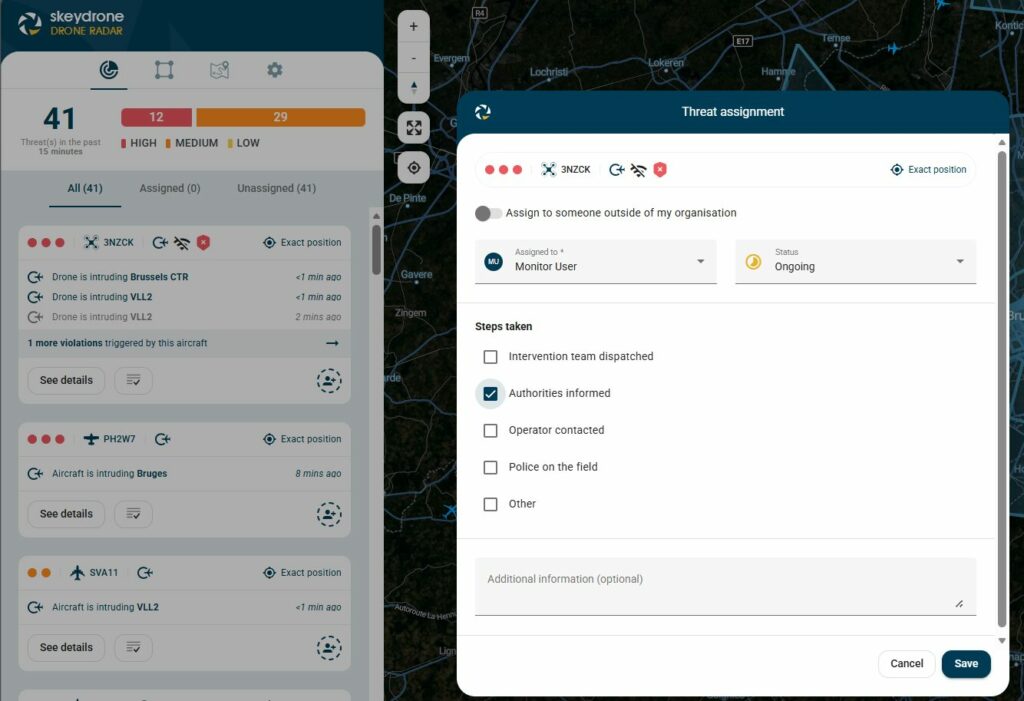
One of the most impactful additions is the ability to assign threats directly within Drone Radar.
When a potential threat is detected, it can now be assigned to a specific user within your organisation or to an external partner. This ensures that responsibility is immediately clear, eliminating ambiguity during time-critical situations.
Assignments are not static. Users can:
- Define the actions that have already been taken, such as dispatching an intervention team, informing authorities, contacting the operator, or confirming police presence on site
- Customise these steps to match internal procedures
- Add notes to provide context and ensure a complete understanding of the situation
The assigned person receives a notification email, enabling fast follow-up. At the same time, assignments remain visible and editable, allowing teams to update progress or reassign responsibility if needed.
Importantly, all users have visibility of both assigned and unassigned threats. This shared overview ensures that everyone understands who is responsible for what at any given moment. The result is greater accountability, clear ownership, and significantly improved collaboration during incident handling.
From Detection to Follow-Up with Enhanced Reporting in Drone Analytics
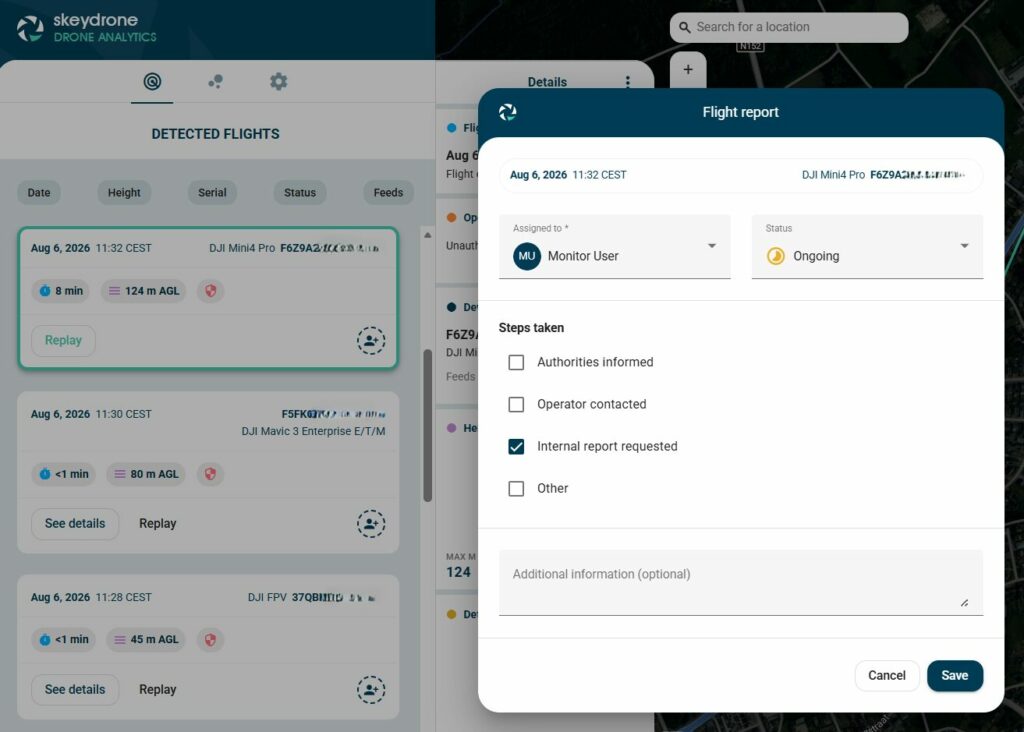
Managing an incident does not stop once the immediate threat is handled. Proper follow-up, documentation, and internal coordination are essential. The updated reporting functionality in Drone Analytics introduces a more structured approach to incident management. Reports can now be created directly from the Detected Flights menu. This automatically links the report to the selected flight, reducing manual work and ensuring that all relevant data is captured from the start.
Reports can be assigned to a specific person, with clear ownership of follow-up actions. Within each report, teams can:
- Track the status of the report
- Record which steps have already been taken, such as informing authorities, contacting the operator, or requesting internal reports
- Define additional actions that still need to be completed
This creates a shared workflow where teams can collaborate within one single platform on post-incident handling, ensuring that nothing is overlooked and that every action is documented.
A More Intuitive Aircraft Details Page
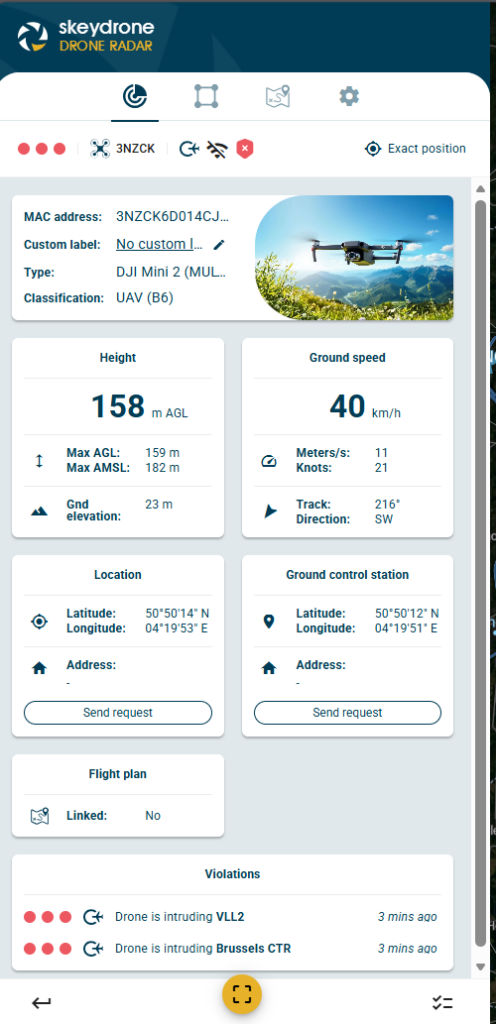
The Aircraft Details page in Drone Radar has been redesigned with a more modern look and feel.
Beyond visual improvements, the update enhances usability by making key information easier to access and interpret. Each aircraft, whether crewed or uncrewed, now includes an image, helping operators quickly identify what they are dealing with.
This improved user experience supports faster decision-making, especially in high-pressure situations where clarity is essential.
Greater Autonomy with the New Profile Page
User management has also been simplified with the introduction of a new self-service profile page. Users can now manage their own personal information without relying on administrator support. This includes updating their name, phone number, and changing their password. By giving users direct control over their profiles, organisations benefit from reduced administrative overhead and more accurate, up-to-date user information.
Strengthening Collaboration Across the Board
While each of these features delivers value individually, their real strength lies in how they work together. Threat assignment ensures that every incident has a clear owner. Enhanced reporting structures the follow-up process and keeps teams aligned. Improved interfaces make information easier to interpret, while self-service capabilities streamline user management. Combined, these updates transform the SkeyDrone Hub into a more collaborative, transparent, and efficient platform for drone monitoring and incident management.
For organisations responsible for critical infrastructure, where every second counts and every action must be traceable, these improvements provide a solid foundation for more effective and accountable operations.
Log in to the SkeyDrone Hub to see these new features in action.